
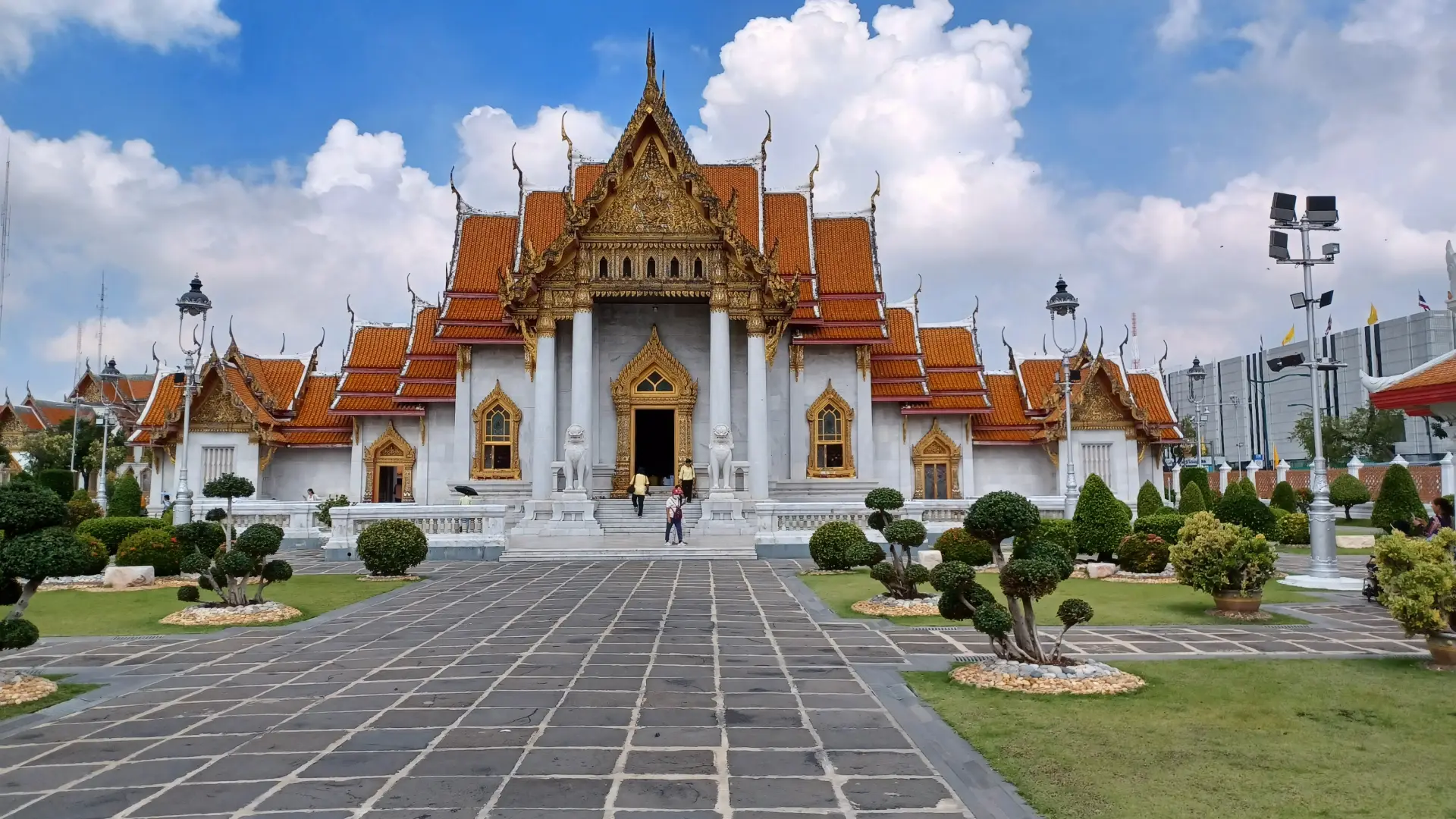
- Historical Significance: Commissioned in 1899 by King Chulalongkorn (Rama V) and completed in 1911, the temple exemplifies modern Thai architecture with European influences, designed by Prince Narisara Nuvadtivongs.
- Architectural Highlights: Constructed primarily from Italian Carrara marble, featuring ornate gables, a Sukhothai-style Buddha statue, and 52 Buddha images in various mudras around the cloister.
- Cultural Role: Serves as a first-class royal temple, housing the ashes of King Rama V, and is a site for Buddhist festivals like Magha Puja and Visakha Puja, with daily alms-giving ceremonies.
- Tourist Appeal: A major attraction in Bangkok’s Dusit district, featured on the Thai 5-baht coin, and home to the Benchamabophit National Museum.
- UNESCO Status: Submitted for World Heritage consideration in 2005, but as of 2025, it remains on the tentative list without full inscription.
- Visitor Experience: Open daily from 6:00 AM to 6:00 PM with a 100 baht entrance fee for foreigners; known for its serene atmosphere and photogenic marble structures.
Located in the heart of Bangkok, Thailand, Wat Benchamabophit Dusitwanaram, more commonly known as the Marble Temple, stands as a testament to exquisite Thai architecture and profound spiritual significance. This iconic Buddhist temple, renowned for its pristine white Carrara marble and harmonious blend of traditional Thai and European design elements, is not only a major religious site but also a captivating tourist attraction. Commissioned by King Chulalongkorn (Rama V) in the late 19th century, the Marble Temple embodies a unique period in Thai history where the nation embraced modernisation while preserving its rich cultural heritage.
A Royal Commission: History and Founding
Wat Benchamabophit Dusitwanaram owes its existence to the vision of King Chulalongkorn (Rama V), one of Thailand’s most revered monarchs, who reigned from 1868 to 1910. Commissioned in 1899, the temple was built near his Dusit Palace, reflecting his desire to create a modern capital while honouring traditional Thai Buddhist values. The design of the temple was entrusted to Prince Narisara Nuvadtivongs, King Rama V’s half-brother, a highly talented artist and architect who skillfully blended traditional Thai religious architecture with European and Chinese influences.
The construction of Wat Benchamabophit marked a significant period in Thai history, as King Chulalongkorn embarked on a series of reforms aimed at modernising the country and strengthening its independence in the face of Western colonial expansion. The temple, though relatively young compared to many other ancient temples in Thailand, quickly became a symbol of this era of transformation. Its creation was part of a broader royal initiative to establish new religious and administrative centres in the Dusit district, which was being developed as a new residential area for the royal family and government officials.
The temple’s name, “Wat Benchamabophit Dusitwanaram,” translates to “the Monastery of the Fifth King located in the Dusit Park.” The use of Italian Carrara marble, a material rarely seen in traditional Thai temples, further underscored the King’s modernising vision and the temple’s unique aesthetic. The temple’s construction was completed in 1909, just a year before King Chulalongkorn’s passing, leaving behind a lasting legacy of his reign and his commitment to both tradition and progress.
Architectural Grandeur: A Fusion of Styles
Wat Benchamabophit is celebrated for its distinctive architectural style, which masterfully blends traditional Thai design with European and Chinese influences. The most striking feature, and the source of its popular name, is the extensive use of white Carrara marble imported from Italy. This luxurious material adorns the temple’s exterior, giving it a luminous and elegant appearance that sets it apart from other temples in Thailand.
The main ordination hall (Ubosot) is a prime example of this architectural fusion. Its multi-tiered, ornate roof, characteristic of traditional Thai temples, is complemented by gilded gables and intricate carvings. The windows and doors are adorned with gold and lacquer, showcasing the meticulous craftsmanship of Thai artisans. Inside the Ubosot, the principal Buddha image, Phra Phutthachinnarat, is a replica of a highly revered Buddha statue in Phitsanulok. The base of this statue contains the ashes of King Chulalongkorn, adding to the temple’s royal significance.
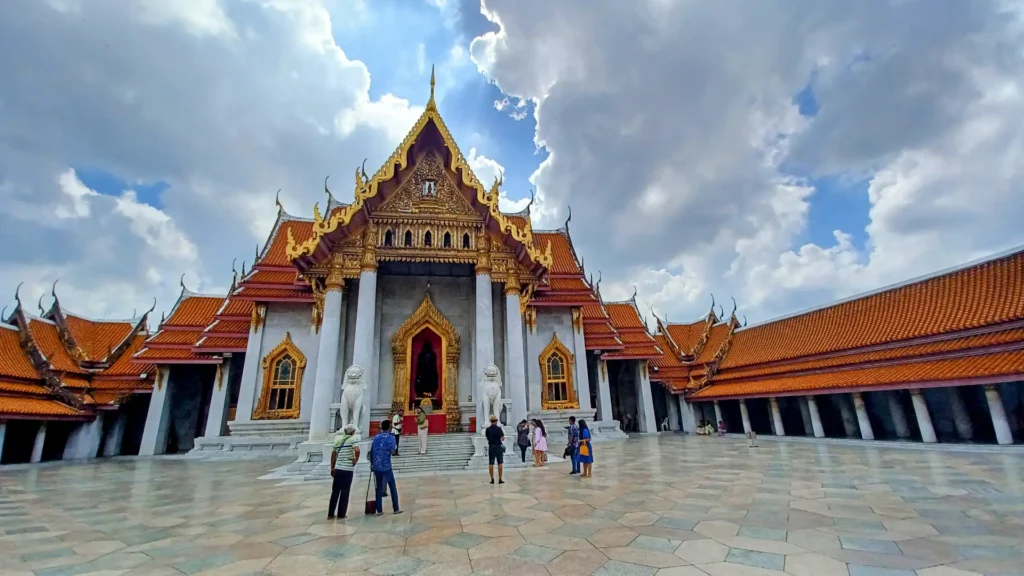
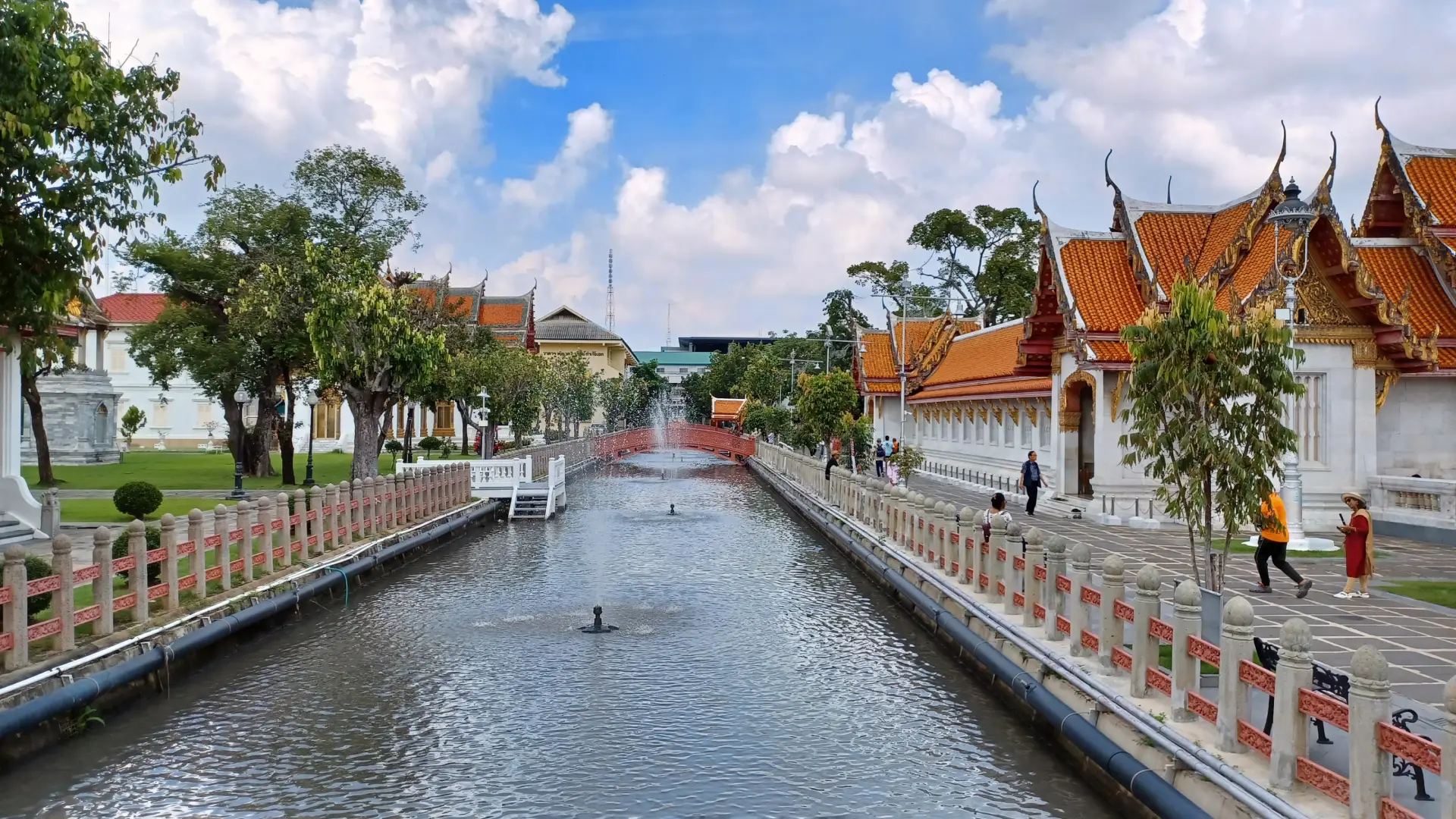
Surrounding the Ubosot is a cloister housing a remarkable collection of 52 Buddha statues, representing various postures and styles from different periods of Thai history, as well as from other Buddhist countries. This unique gallery provides a comprehensive overview of Buddhist art and serves as an educational display for visitors. The temple grounds also feature beautifully manicured gardens, canals, and bridges, creating a serene and picturesque environment that enhances the overall aesthetic appeal. The blend of vibrant mosaics depicting mythological creatures and religious scenes on the exterior walls further enriches the visual experience, making Wat Benchamabophit a true masterpiece of architectural design.
Religious Significance and Sacred Spaces
Beyond its architectural splendour, Wat Benchamabophit holds profound religious significance as an active Buddhist temple and a centre for monastic life. It serves as a vibrant place of worship, meditation, and learning for both monks and lay practitioners. The temple’s serene atmosphere and beautiful surroundings provide an ideal setting for spiritual contemplation and practice.
The main ordination hall, or Ubosot, is the most sacred space within the temple complex. It is here that important Buddhist ceremonies, ordinations, and daily prayers take place. The presence of the ashes of King Chulalongkorn beneath the main Buddha image further elevates its sanctity, connecting the temple directly to the revered monarchy of Thailand. The cloister surrounding the Ubosot, with its impressive collection of Buddha images, serves not only as an artistic display but also as a visual representation of the diverse forms and teachings of Buddhism across different eras and regions.
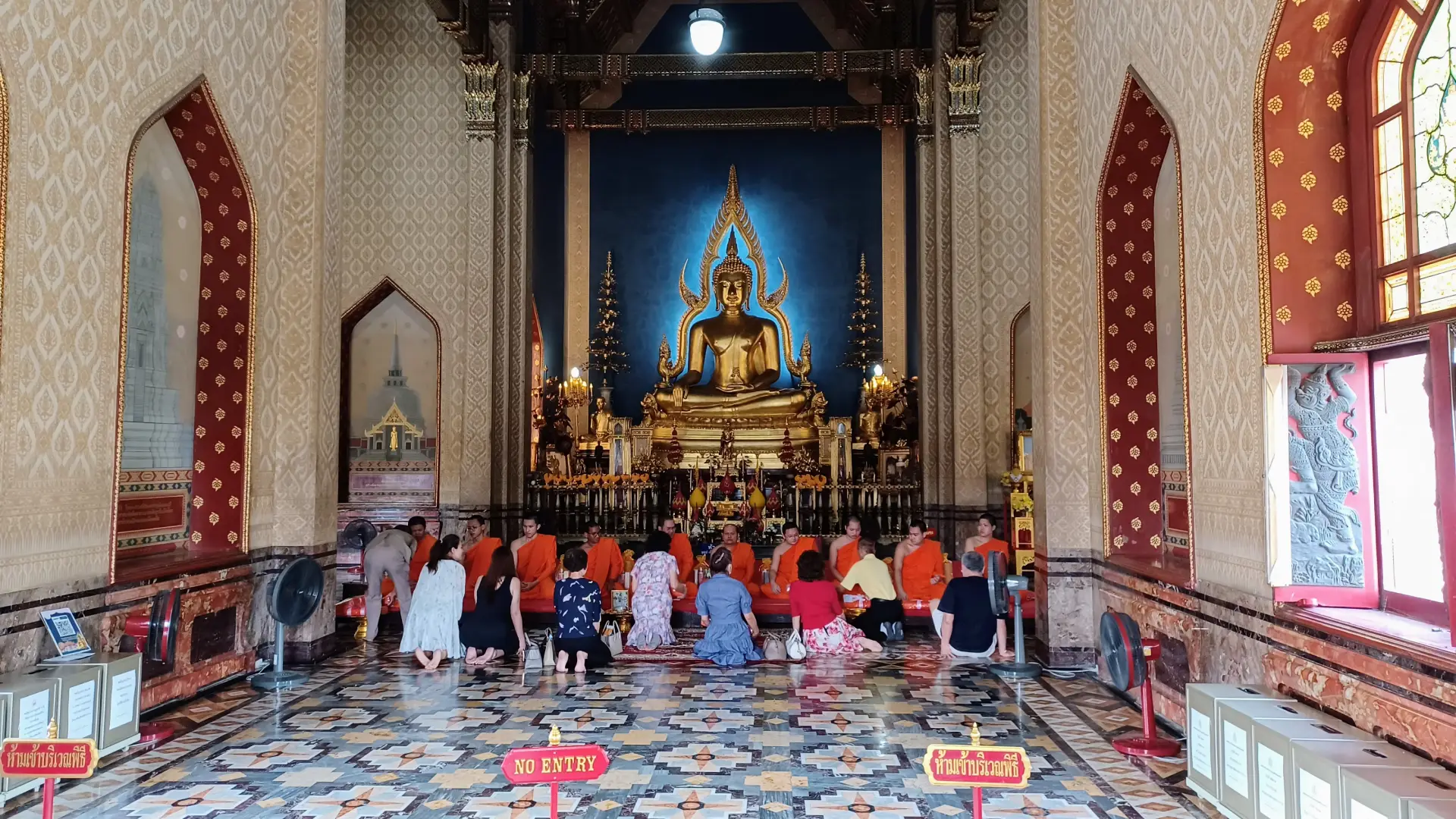
Wat Benchamabophit is also home to a community of Buddhist monks who reside within the temple grounds. Their daily routines, including morning alms rounds and chanting, contribute to the temple’s spiritual ambience and offer visitors a glimpse into monastic life. The temple actively promotes Buddhist education and practices, serving as a focal point for religious activities and cultural preservation in Bangkok. Its role as a living temple, rather than merely a historical monument, underscores its continued importance in the spiritual life of Thailand.
A Cultural Landmark and Tourist Attraction
Wat Benchamabophit Dusitwanaram is not only a significant religious site but also one of Bangkok’s most popular and iconic cultural landmarks, attracting countless tourists from around the world. Its unique blend of traditional Thai and European architectural styles, coupled with its pristine white marble, makes it a visually stunning destination and a favourite among photographers.
Visitors are drawn to the temple’s serene ambience, offering a peaceful escape from the bustling city. The opportunity to observe the daily life of Buddhist monks, witness traditional ceremonies, and explore the beautifully maintained grounds provides a rich cultural experience. The cloister’s collection of Buddha images is a particular highlight, offering a fascinating journey through the evolution of Buddhist art.
The temple’s prominence is further cemented by its appearance on the reverse side of the Thai 5 Baht coin, signifying its importance in the national consciousness. Its accessibility and central location in the Dusit district make it an essential stop on any Bangkok itinerary, often combined with visits to nearby attractions like the Dusit Palace and the Ananta Samakhom Throne Hall. Wat Benchamabophit serves as a powerful symbol of Thailand’s rich cultural heritage and its enduring spiritual traditions, leaving a lasting impression on all who visit.
Conclusion
Wat Benchamabophit Dusitwanaram, the Marble Temple, stands as a magnificent embodiment of Thailand’s rich cultural and spiritual heritage. From its royal origins under King Chulalongkorn to its distinctive architectural fusion of Thai, European, and Chinese influences, the temple is a testament to a nation embracing modernity while cherishing its traditions. As an active centre of Buddhist practice and a captivating tourist attraction, it continues to inspire awe and reverence. The Marble Temple is more than just a beautiful structure; it is a living monument that reflects Thailand’s artistic prowess, religious devotion, and historical journey, inviting all who visit to experience its enduring elegance and profound tranquillity.
References
- Wat Benchamabophit Dusitvanaram ‘Marble Temple’ – Beautiful Thai Temple https://yourthaiguide.com/wat-benchamabophit-dusitvanaram-marble-temple-beautiful-thai-temple-featured-5-baht-coin-made-italian-carrara-marble/
- Wat Benchamabophit Is A Marble Beauty Of Bangkok – Travel Triangle. (2024, May 24). https://traveltriangle.com/blog/wat-benchamabophit/
- Wat Benchamabophit (Marble Temple) | Inspire Asia Group Sdn Bhd. https://www.inspiretravel.my/wat-benchamabophit-marble-temple
- Discover 10 Fun Facts About Bangkok’s Marble Temple – Agoda.com. (2025, April 13). https://www.agoda.com/travel-guides/thailand/bangkok/discover-10-fun-facts-about-bangkoks-marble-temple/
- Wat Benchamabophit – Wikipedia.